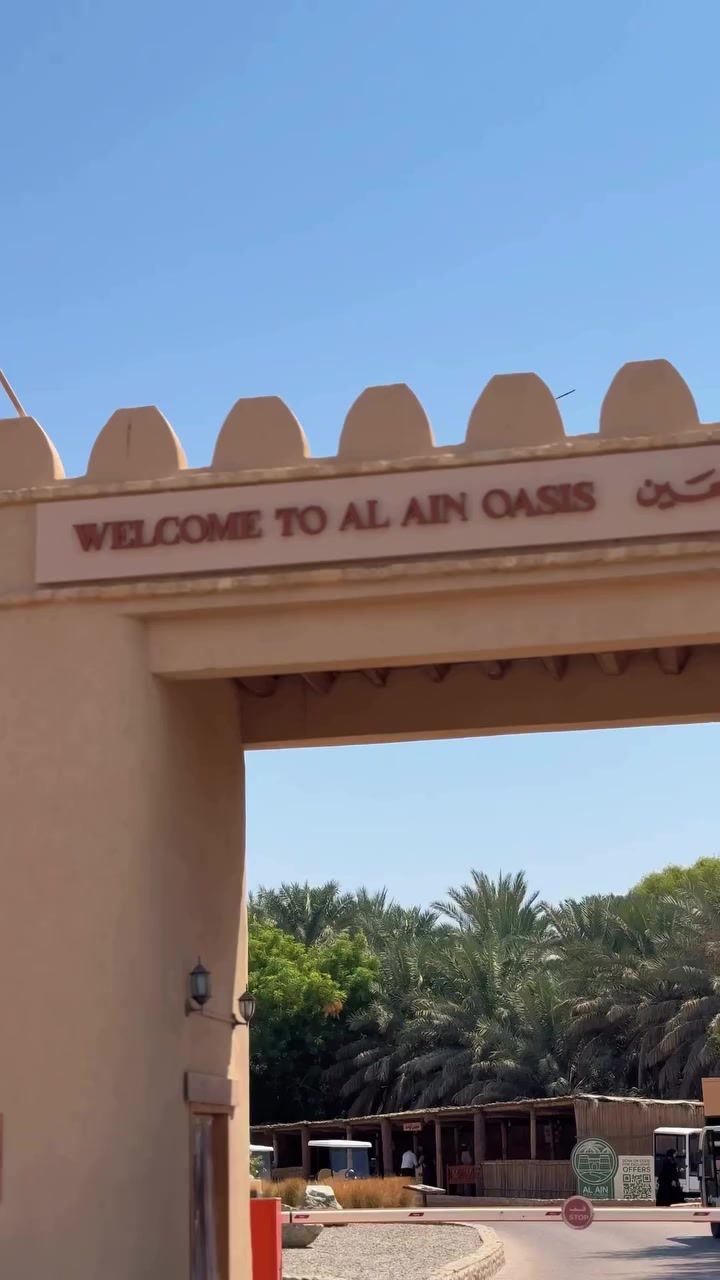
The correct way to describe the status is that Al Ain Oasis forms part of the UNESCO World Heritage property “Cultural Sites of Al Ain (Hafit, Hili, Bidaa Bint Saud and Oases Areas)”, which was inscribed on the World Heritage List in 2011.
The oasis components of the property include Al Ain Oasis, Mutaredh Oasis, Muwaiji Oasis, Hili Oasis, Jimi Oasis and Qattara Oasis.
A GREEN CITY BUILT AROUND WATER
Al Ain Oasis is one of the clearest places to understand why Al Ain is known as the Garden City. In the middle of an arid region, palms, fruit trees and cultivated plots form a cool green landscape. The oasis is part of the UNESCO World Heritage property Cultural Sites of Al Ain, a serial property that also includes other oases, archaeological areas and Jebel Hafit. The oasis is important not only for its landscape but also for its traditional irrigation system and agricultural heritage. It preserves a living relationship between settlement, farming and carefully managed water. The quiet contrast between greenery and surrounding desert is central to its character.
THE FALAJ SYSTEM
The defining feature of the oasis is the falaj irrigation network. Water moves through underground and open channels, then reaches agricultural plots through smaller branches. The system distributes a limited resource with remarkable precision and supports a layered garden: taller date palms provide shade, while fruit trees and crops grow below. Look closely at the channels and small access points along the paths. They show that this is working agricultural infrastructure, not a decorative park created for visitors. Every branch reflects generations of practical knowledge about gravity, timing and shared responsibility.
WHAT A WALK REVEALS
Begin with the broad palm-lined paths, then turn into narrower lanes between gardens. The changing shade makes the oasis feel larger and more varied than it first appears. You may notice date palms in many forms, citrus and other fruit trees, earthen boundaries, water channels and glimpses of traditional buildings beyond the vegetation. The Eco-Centre adds useful context through displays about the landscape, farming and water management. Allow time to pause: the sound of moving water and filtered light are part of the experience.
WHY THE OASIS MATTERS
For thousands of years, oases made permanent life possible in the interior of the Arabian Peninsula. Al Ain's oasis landscape records that achievement in a form visitors can still walk through. It links practical knowledge—finding, sharing and protecting water—with social customs, food production and the identity of the city. UNESCO recognition reflects this broader cultural landscape rather than a single monument. The working plots and maintained channels matter because they keep the knowledge legible and connect heritage with everyday stewardship.
PLANNING THE VISIT
Al Ain Oasis is in central Al Ain, in the Al Mutawaa area, and works well as a calm morning or late-afternoon stop. Wear light, comfortable clothing and shoes suitable for uneven paths; a hat, water and sun protection are sensible even under the palms. Check the current visitor arrangements and opening times before setting out, especially around public holidays or special events. Stay on public paths, do not enter cultivated plots, and avoid touching channels, plants or farm equipment. Photography is welcome when it does not interrupt workers or other visitors, and the quietest impressions come from slowing down rather than trying to cover every path.
A DAY AROUND AL AIN
The oasis can anchor a wider heritage day. Nearby Al Ain Palace Museum helps explain the ruling family's former home and the city's modern history, while Al Ain Museum places the oasis within a much longer archaeological story. Forts such as Al Jahili and Sultan Fort add defensive architecture and shaded courtyards. A visit to the oasis is most rewarding when these places are treated as connected chapters: water and farming, family life, archaeology and urban history all meet in the same city. Leave space for an unhurried meal or a view of Jebel Hafit.
LOCATION
Al Ain Oasis Al Mutawaa, Al Ain, Abu Dhabi, United Arab Emirates
Frequently asked questions
Where is Al Ain Oasis?
Al Ain Oasis is located in the central part of Al Ain, Abu Dhabi Emirate, UAE.
Is Al Ain Oasis a UNESCO World Heritage Site?
Al Ain Oasis forms part of the UNESCO World Heritage property “Cultural Sites of Al Ain (Hafit, Hili, Bidaa Bint Saud and Oases Areas)”, which was inscribed in 2011.
How large is Al Ain Oasis?
Abu Dhabi Culture gives an area of around 136 hectares for Al Ain Oasis. Broader descriptions of the Al Ain oasis landscape may refer to an area of around 1,200 hectares.
How many date palms are in Al Ain Oasis?
The oasis contains more than 147,000 date palms representing more than 100 varieties.
What is a falaj?
A falaj is a traditional irrigation system using underground and surface channels to distribute water to agricultural plots.
Can you see a working falaj system at Al Ain Oasis?
Yes. The traditional falaj system remains part of the living oasis landscape and continues to be used for irrigation.
Can visitors walk inside Al Ain Oasis?
Yes. The oasis is accessible as a public cultural and natural space with walking routes. Current visitor conditions and opening hours should be checked before travelling.
What can you visit near Al Ain Oasis?
Nearby attractions include Al Ain Palace Museum, Al Ain Museum and historic forts including Sultan Fort and Al Jahili Fort.
Why is Al Ain Oasis historically important?
The oases of Al Ain demonstrate how people used water management, agriculture and falaj irrigation for thousands of years to create a sustainable green environment in an arid region.
Is Al Ain Oasis just a palm park?
No. It is a living agricultural and cultural landscape with date plantations, an operating irrigation system, historic plots and traditional farming practices.