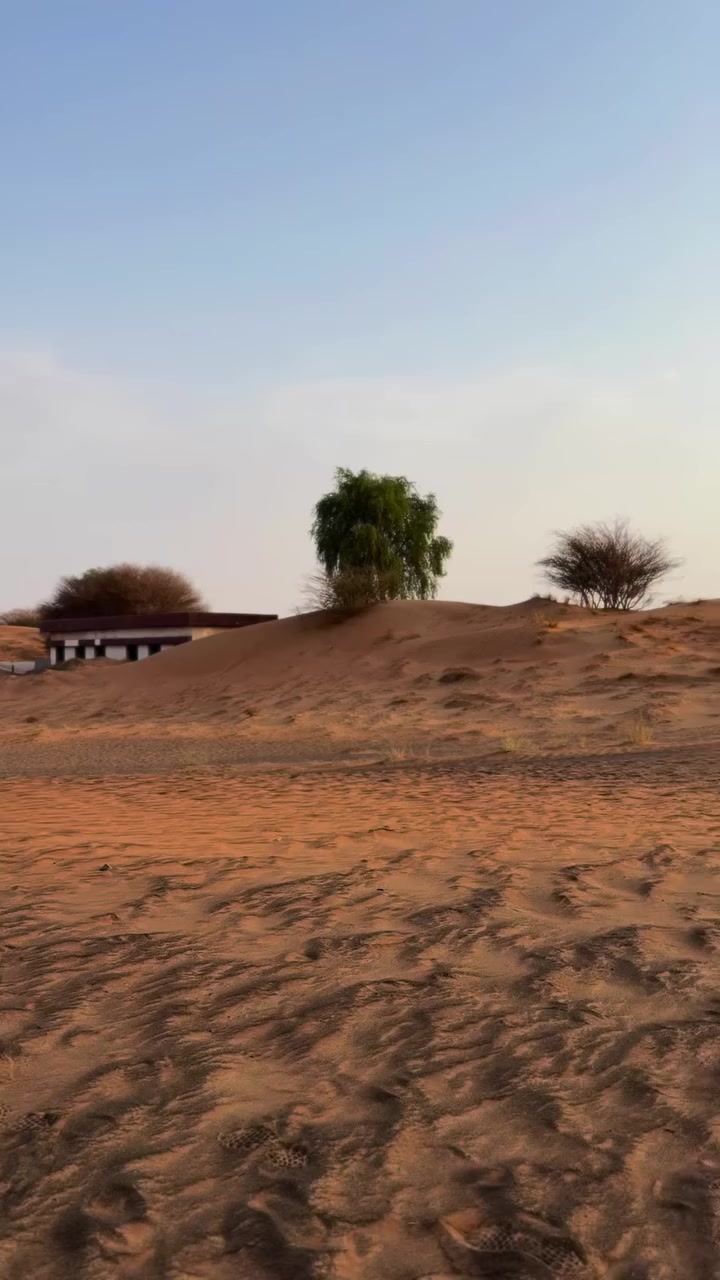
According to Sharjah Tourism, the village was built after the formation of the United Arab Emirates in 1971 as part of a public housing project. It became home to members of a Bedouin tribe who had previously lived a semi-nomadic lifestyle.
Around two decades later, the residents left the settlement. The official tourism account associates the departure with difficult natural conditions, desert winds and the constant movement of sand that made everyday life increasingly difficult.
Over time, the desert became the village’s defining feature. Sand dunes moved into courtyards and rooms, gradually covering doors, windows and parts of the buildings.
WHAT REMAINS TODAY
The village consists mainly of two rows of similar residential houses and a mosque. The architecture is simple, but the combination of repeated houses, empty rooms and surrounding dunes creates a striking visual landscape.
Some buildings are partially buried by sand. In several places, sand has already entered the interiors, while dunes have formed around the houses.
The name “Ghost Village” is primarily connected with the atmosphere and local stories. It should not be interpreted as an official claim that the village is haunted.
LOCAL LEGENDS
Al Madam has long been surrounded by stories about jinn and supernatural reasons for the village’s abandonment.
These are local legends rather than established historical facts. The official tourism explanation points instead to difficult living conditions, desert winds, moving sand and the challenges of the remote environment.
For the article, clearly separate documented history from folklore: the atmosphere can certainly feel mysterious, but supernatural causes have not been confirmed.
WHY PEOPLE VISIT
Today, Al Madam Buried Village attracts visitors interested in unusual places, history, architecture and photography.
There is no need to present it as a conventional tourist attraction with entertainment or extensive facilities. The main experience is the location itself: abandoned houses, desert dunes, the old mosque and the feeling of stepping into another period of the UAE’s history.
For photography, the contrast between the geometric lines of the houses and the natural shapes of the dunes is particularly striking.
PRESERVATION
In July 2023, the Ruler of Sharjah directed authorities to preserve the Buried Village in Al Madam and prepare it for visitors and tourists.
This is important context: the village is not only an unusual desert destination but also part of the region’s history that authorities intend to preserve.
CURRENT ACCESS
Before travelling, check the current condition of the site and the access road. Conditions on desert routes can change, and some sections may require a suitable vehicle.
Do not drive beyond barriers or enter restricted areas or roads where access is prohibited.
HOW TO EXPERIENCE THE SITE
Al Madam is most rewarding when approached as a historical landscape rather than a stage set for a ghost story. Walk around the visible rows, notice how repeated house plans create a sense of a planned community, and compare the clean geometry of walls with the irregular dunes that have entered the rooms. The mosque adds an important communal element to the settlement, even though the surviving buildings are now empty.
Give the site time and keep the group small and quiet. Photograph from stable ground, avoid leaning on fragile walls and never remove objects or sand from the buildings. There may be no dependable shade, toilets or refreshments at the site, so plan for a self-sufficient visit and leave before heat or darkness makes the return difficult.
A DESERT ARCHIVE
The settlement records a relatively recent chapter of life in the Emirates: housing was provided for families whose earlier way of life was more mobile, yet the desert environment continued to shape what was possible. Wind and drifting sand are not decorative details here; they explain why rooms, courtyards and entrances now look partly absorbed by the landscape.
That makes the village valuable without exaggerating its age. It is not an ancient ruin, and the popular word “Ghost” does not prove a supernatural event. The documented account centres on living conditions and the decision to leave. Reading the site this way gives visitors a more respectful understanding of adaptation, settlement and the force of the desert.
LOCATION
Al Madam Ghost Village Al Madam, Sharjah, United Arab Emirates
Frequently asked questions
Where is Al Madam Ghost Village?
Al Madam Ghost Village is located in the Al Madam area of Sharjah, surrounded by desert dunes.
What is the official name of the village?
The official Sharjah tourism website uses the name Al Madam Buried Village.
Why is it called the Ghost Village?
The name refers to its abandoned appearance, empty houses and local stories about the site. It is a popular name, not confirmation that the village is actually haunted.
Why did the residents leave?
According to Sharjah Tourism, the residents left around two decades after the village was built because of difficult natural conditions, desert winds and constantly moving sand that made life increasingly difficult.
When was Al Madam Buried Village built?
The official tourism source places its construction in the period after the formation of the UAE in 1971.
What can you see at the village?
Rows of residential houses and a mosque remain. Many of the buildings and surrounding areas are partially covered by sand.
Did the residents leave because of jinn?
There is no evidence confirming this explanation. Stories about jinn are local legends. The official explanation focuses on natural and living conditions.
Can you visit Al Madam Ghost Village?
The location is known as a visitor destination, but access conditions can change. Check the current status before travelling and respect all barriers and restrictions.
Do you need a 4WD?
The approach includes a difficult sandy section where a suitable vehicle may be required. Conditions can change, so check the current access situation before travelling.
Is the village being preserved?
Yes. In 2023, the Ruler of Sharjah directed authorities to preserve the Buried Village and prepare it for visitors and tourists.