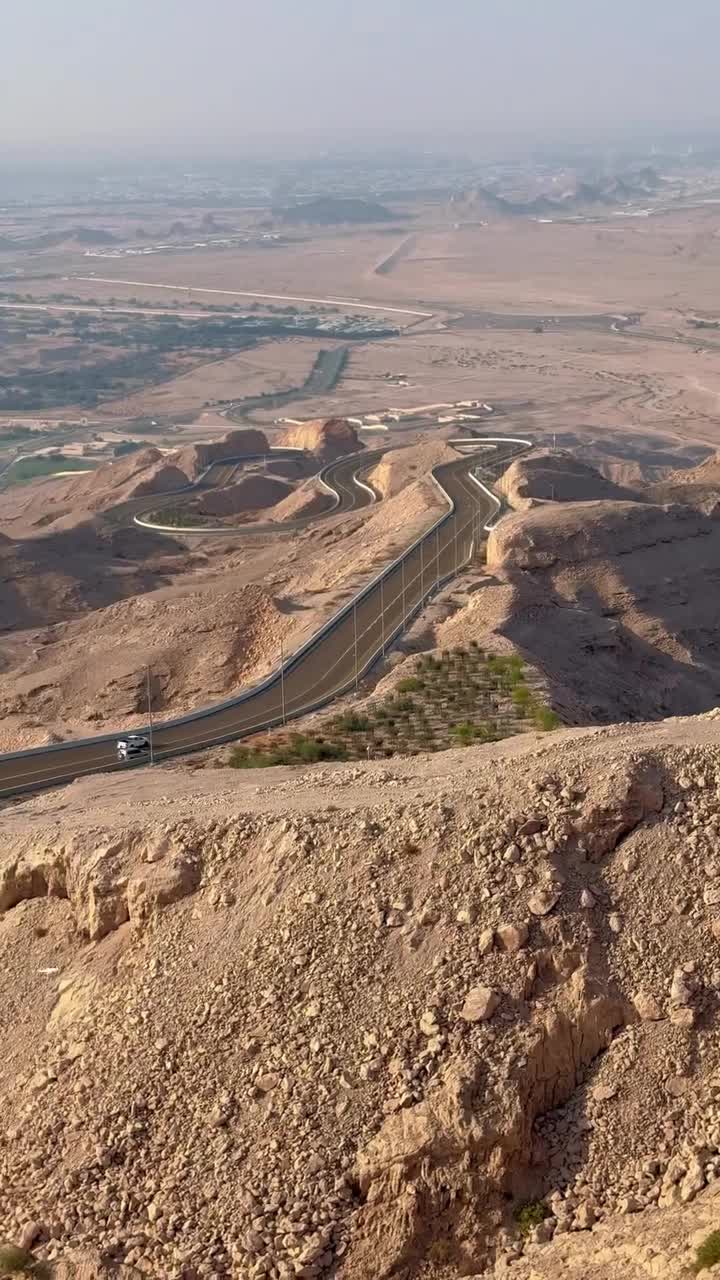
Jebel Hafit is one of Al Ain's most impressive natural landmarks and a great destination if you want to experience a different side of the UAE.
Instead of skyscrapers and shopping malls, you get a rocky mountain, desert scenery, a winding road to the summit and panoramic views over the green city of Al Ain and the surrounding desert.
Jebel Hafit rises to around 1,249 metres and is the highest peak in the Emirate of Abu Dhabi and the second-highest peak in the UAE. The summit can be reached by car, motorbike or bicycle.
A MOUNTAIN ABOVE THE OASIS
Jebel Hafit rises on the southern edge of Al Ain, where a pale limestone mountain meets the green city and the desert beyond. At about 1,249 metres, it is the highest peak in Abu Dhabi Emirate and one of the UAE’s defining mountain landmarks. The drive offers a clear sense of changing elevation: palms and neighbourhoods give way to exposed rock, broad valleys and an open horizon.
THE SUMMIT ROAD
The paved Jebel Hafit road is the centrepiece of a visit. Its bends climb steadily and reveal new angles over Al Ain, while designated stopping areas make it possible to pause without treating the carriageway as a viewpoint. A normal roadworthy car is suitable for the paved ascent; drive at a controlled speed, keep to the lane and be considerate of cyclists and other vehicles. Check conditions before leaving, since mountain roads can be affected by weather or maintenance.
VIEWPOINTS AND SUMMIT STOPS
Views become wider higher on the mountain: the oasis city appears as a green patchwork against tan desert and rugged slopes. Stop only where parking is allowed and be careful near edges. Around the summit there are places to pause, photograph the landscape and rest. A café is listed near the top, but opening hours and services can change, so do not plan a late arrival around refreshments alone.
GEOLOGY OF JEBEL HAFIT
Jebel Hafit is an anticline: layers of limestone were folded and lifted, then shaped by erosion. This structure explains the mountain’s long ridges, steep faces and exposed bands of rock. It also helps explain why the landscape looks different from the dunes around Al Ain. Stay on established roads and paths, and do not remove rock or disturb geological features; the mountain is a natural and cultural landscape, not a quarry.
FIVE THOUSAND YEARS OF HISTORY
The foothills contain more than 500 tombs dating to roughly 5,000 years ago. They are part of the cultural sites of Al Ain, a UNESCO World Heritage landscape that records the region’s long relationship with water, settlement and trade. The tombs are not decorative viewpoints: keep to visitor routes, do not climb or touch structures, and follow signs around archaeological areas.
DESERT PARK AT THE FOOT
Jebel Hafit Desert Park gives the foothills a separate, slower programme. Depending on the current offer, visitors can plan hiking, mountain biking, horse or camel rides, and camping or glamping. Treat these as park activities rather than assuming they are available along the summit road. Reserve where required and confirm operating times, age rules and weather policies before building an overnight plan.
SUNRISE, SUNSET AND TEMPERATURE
Early morning and the hour before sunset bring softer light for the road and city panorama. Sunset is popular, so allow time for traffic, parking and the descent after dark. Winter is generally more comfortable for outdoor stops, while summer heat can make even a short walk demanding. Carry water, sun protection and a light layer for the summit, where wind can feel cooler than in town.
A SIMPLE PLANNING CHECKLIST
Set aside several hours for the drive, stops and return rather than measuring the visit by kilometres alone. Download or save navigation, keep the car fuelled, and check road, café, park and attraction status on the day. Pairing the mountain with Al Ain Oasis, the city’s museums or another foothill stop creates a balanced itinerary. Respect barriers and official instructions, especially after rain or during maintenance.
LOCATION
Jebel Hafit Al Ain, Abu Dhabi Emirate, United Arab Emirates
Frequently asked questions
Where is Jebel Hafit?
Jebel Hafit is located in Al Ain, Abu Dhabi Emirate, near the border with Oman. The exact location is provided in the Google Maps link in the article.
Can I drive to Jebel Hafit in a regular car?
Yes. The road to the summit is paved, so a dedicated 4x4 is not required for the summit drive.
What is the best time to visit Jebel Hafit?
Early morning and the period before sunset are particularly good for photography and panoramic views. During hotter months, consider the temperature and choose a more comfortable time of day.
Are there places to stop at Jebel Hafit?
Yes. There are parking and stopping areas along the route and around the summit. A café is also listed at the summit; check its current opening hours before travelling.
What else can I visit near Jebel Hafit?
Jebel Hafit Desert Park is located at the foot of the mountain and offers hiking, mountain biking, horse and camel rides, camping and glamping.